The gate is the hardest-working part of a fence. It opens and shuts every day, it hangs its whole weight off one side, and it takes the brunt of every gust that catches it. So it is no surprise that a wood privacy gate often starts to sag or drag before the rest of the fence shows any trouble.
A gate that will not latch is more than a nuisance. It can let the dog out, leave the yard open, or swing hard in the wind until the hinges pull loose.
Most gate problems come down to a handful of causes. Knowing which one you are looking at tells you whether the fix is small or whether the post or frame needs work.
Signs a Wood Gate Is Failing
Gates usually give a few warnings before they fail. The bottom corner drags on the ground or scrapes the concrete. The latch no longer lines up, and you have to lift the gate to close it. The gap on the latch side is wider at the top than the bottom. Hinge screws are loose or backing out. The post the gate hangs on moves when you push it. Boards are cracked, or the frame is pulling apart at the corners.
One of these on its own can be minor. Two or three together usually mean something structural has moved.
Hinge Placement and Hardware
A gate hangs from one side, so its weight is always trying to pull it down and away from the post. The top hinge takes that pull. The bottom hinge gets pushed back toward the post.
Where the hinges sit makes a big difference. Hinges set close together give the gate more leverage against them. Hinges screwed only into the boards, instead of the frame behind them, tend to pull out. On a tall privacy gate, a third hinge helps spread the load.
The hardware has to match the gate, too. Hinges and screws sized for a short garden gate will not hold an 8 foot cedar gate for long. Wood also swells in wet weather and shrinks in summer heat, and that slow movement loosens screws over time. Outdoor-rated, rust-resistant hardware holds up much better.
When a gate drops, the latch is often the first thing to stop working. Moving the latch down to meet the gate gets it closing again, but the gate is still sagging.
Gate Bracing and Framing
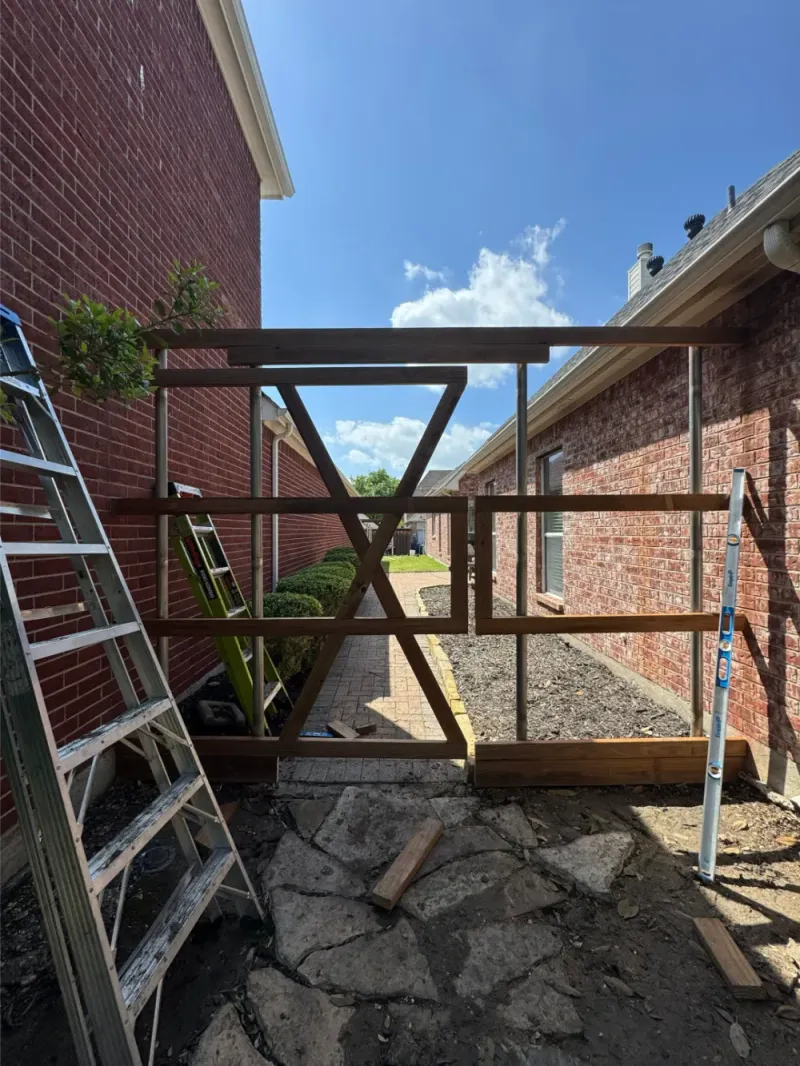
A gate frame is a rectangle, and under weight a rectangle wants to fold into a slanted shape. A diagonal brace keeps it square.
The direction of that brace matters. It should run from the bottom corner on the hinge side up to the top corner on the latch side. Set that way, it pushes back against the gate’s weight. Installed the other way, it does very little, and the gate sags anyway.
The frame joints matter as well. Over time, fasteners loosen and the bottom rail can soften where water sits. Once the frame leans out of square, tightening the hinges will not bring it back.
The Hinge Post
The post a gate hangs on carries the whole gate, every time it swings. If that post moves, the gate goes with it.
North Texas clay swells when it is wet and shrinks when it dries. A post set shallow gets worked loose a little more with each cycle until it starts to lean toward the opening. As it leans, the latch side of the gate drops. A wood post can also rot right at the ground line, where moisture sits.
You can check this yourself. Press a screwdriver into a wood post at the soil line. Soft or crumbling wood means rot has started. Then push the post at shoulder height. If it moves at the base, the problem is under the dirt.
New hinges on a leaning post will not hold for long. The post has to be reset or replaced first. That is fence repair work, and it is what our crews do every day. Every fence we build goes in on galvanized steel posts set 3 feet into the ground.
Ground Clearance
A gate needs room underneath to swing. The gap that was there on day one can disappear over time.
Sometimes the gate has dropped. Sometimes the ground has come up to meet it. Clay can heave after heavy rain, and new mulch, soil, or concrete can raise the grade under the gate. Either way, the gate starts to drag, and every drag puts more strain on the hinges.
The gap on the latch side matters too. Wood swells in wet weather, and a gate hung too tight can bind against the post.
Trimming the bottom of a dragging gate can buy some time. Check why it dropped first, though. If the post or frame has moved, the drag will come back.
Repairing or Rebuilding a Wood Gate
Some gate problems are small. If the post is solid and the frame is still square, new hinges, longer screws, a corrected brace, or a reset latch can put a gate back in working order.
Others go deeper. A leaning or rotted hinge post has to be reset or replaced. A frame that has rotted, pulled out of square, or been patched more than once is usually better rebuilt than fixed again. And if the fence on either side of the gate is leaning too, the gate is a symptom of a bigger problem along the whole line.
When a gate problem traces back to the posts or the fence around it, we treat it as part of the fence repair. Every post along the run gets checked, including the posts the gate hangs on, and you hear exactly what we found before we quote. When a run needs to be rebuilt, the gate is built as part of the new fence.

Keeping a Gate Working
A few habits help a wood gate last. Check the hinge screws a couple of times a year, especially after a wet spring or a hot summer. Keep the gate latched, so the wind cannot swing it hard against the post. Do not let kids ride the gate as it swings. Keep mulch, soil, and plants pulled back from the bottom of the gate.
Keep a finish on the wood. Fence staining slows the swelling and shrinking that loosens hardware. Watch the latch. When it starts to miss, the gate is telling you something has moved.
If your gate is dragging or the post it hangs on has started to lean, we can come out, walk the fence line with you, and show you what is going on. Call Mom’s Fence Man at 469-253-3623 or request an estimate.