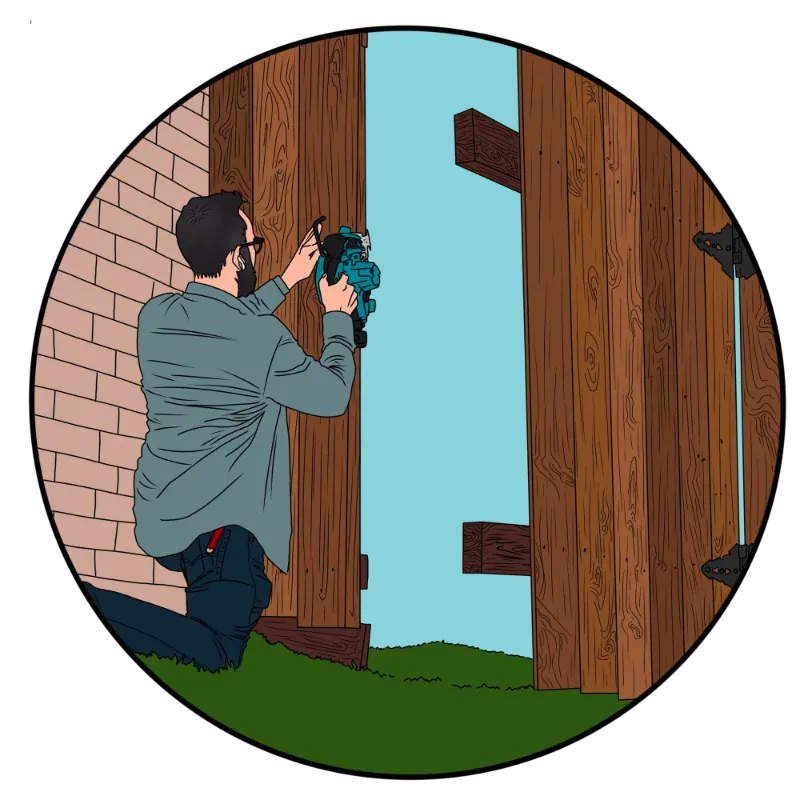
A privacy fence in Plano has to do two things at once. It needs to give you the coverage you want, and it needs to fit the rules for your lot.
That means the design cannot start with a picture of a fence and work backward. Height, placement, corner-lot visibility, easements, pool requirements, and HOA standards can all change what belongs in a specific part of the yard.
For most Plano backyards, cedar gives us plenty of room to build for privacy. The details are what make the project fit the house instead of creating a problem later.
Start With the Lot
The first step is figuring out where the fence can actually go.
Property lines, shared fences, alleys, utility areas, and visibility requirements can all affect the layout. A corner lot can be very different from a middle lot even when the houses are on the same street.
Plano also treats front-yard fencing differently from backyard fencing. The city allows taller fencing behind the house, while fences toward the front need to stay lower and more open.
That makes a tall cedar privacy fence a natural backyard option, not something that can simply be carried around every side of the property.
We check the lot and existing fence line before material is ordered so the layout is based on the property that is actually there.
Cedar Works Well for Privacy
Cedar is what we use for our wood fences because it holds its shape well in North Texas heat and takes stain cleanly.
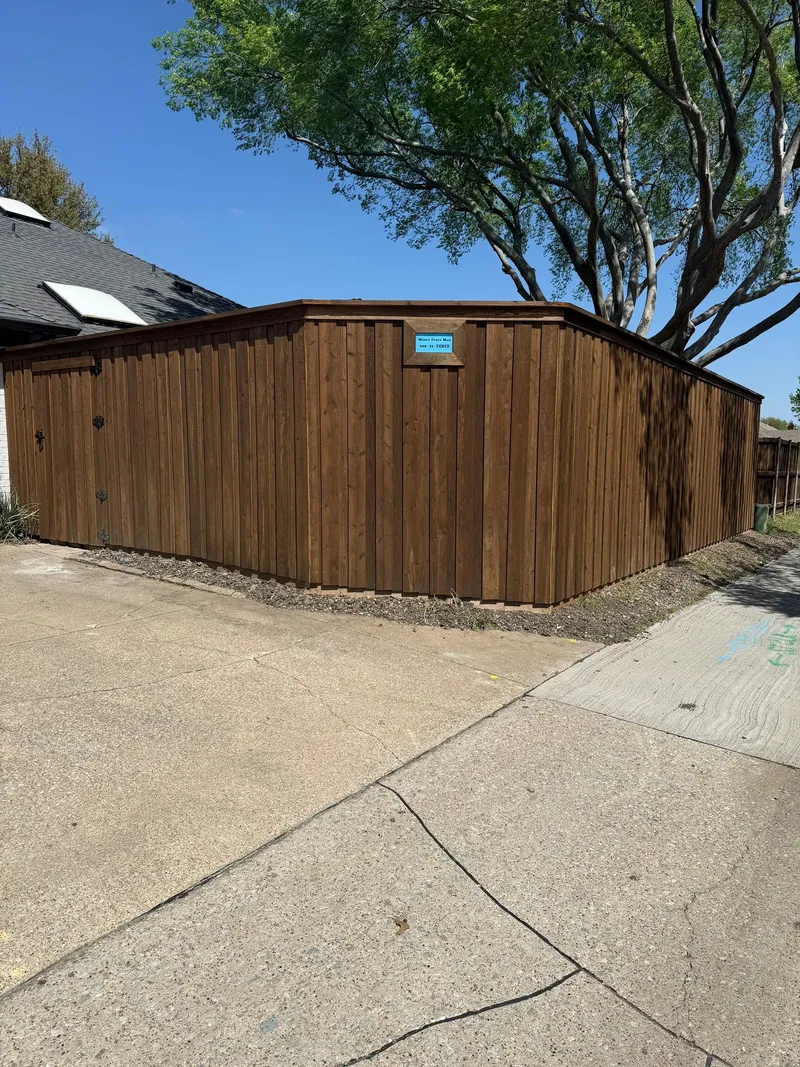
For privacy, the board layout matters just as much as the species. A side-by-side fence can open small gaps as the wood dries. Board on board overlaps the pickets, so the fence stays visually closed even as the boards move.
That is why our signature build is an eight-foot pre-stained cedar board-on-board fence with a top cap where the property and rules allow it.
You can see the full build on our privacy fence installation page.
HOA Approval Comes Before the Build
Plano neighborhoods can have very different HOA standards.
One association may care mainly about height and stain color. Another may regulate the board style, finished side, gate design, or where the fence can start in relation to the house.
City approval and HOA approval are not the same thing. A fence can meet Plano’s code and still violate a neighborhood rule.
The easiest way to avoid a redesign is to pull the HOA documents before finalizing the fence. If the association requires an architectural submission, it helps to know the exact height, style, and color before that packet goes in.
We can provide the project details you need for the fence itself, but the homeowner should still confirm the HOA’s current approval process because those rules belong to the association, not the city.
Pre-Stained or Unstained Cedar
Both can work in Plano. The difference is when the finish happens.
Pre-stained cedar arrives with the stain already on the boards. The finish reaches areas that become hard to access after the fence is assembled, and the fence looks complete as soon as the build is done.
Unstained cedar gives you more time to choose a color after seeing the wood next to the house. The tradeoff is that staining becomes a second project, and bare cedar will begin changing color in the Texas sun while you wait.
If you want the fence finished before it is installed, see our pre-stained cedar fence options. If the fence is already up and needs a finish, we also provide fence staining.
Plano Soil Matters Below Ground
The part of the fence you cannot see has a lot to do with how long the part above ground stays straight.
Plano sits on Blackland Prairie clay. The soil swells when it is wet and shrinks when it dries. Shallow posts get worked back and forth through those cycles.
We use heavy-duty galvanized steel posts instead of wood. They go three feet into the ground, and up to four feet where the lot allows, with six-foot spacing instead of the wider spacing used on many basic fences.
The closer spacing matters even more on a tall solid fence because the boards catch wind. A privacy fence is only as strong as the post line carrying it.
Plan for Gates and Shared Fences
Gates are easy to treat like an afterthought. They should not be.
A tall cedar gate is heavy. It needs the right frame, hinges, and posts to stay square. We plan the gate openings with the rest of the fence so the section does not sag later.
Shared fence lines also need to be worked out before demolition. If an existing fence belongs to both neighbors or sits along a shared boundary, removing it can require a conversation before our crew starts.
Plano has its own rules around adjoining fences and spacing, so building a second fence directly beside an old one is not always the simple workaround it sounds like.
Our Plano service area page covers more of the local details we look at before a replacement.
Build Privacy Where It Helps
The tallest fence is not automatically the best privacy plan.
We look at where the sightlines actually come from. Sometimes the problem is a second-story window. Sometimes it is a neighbor’s patio, an alley, or a pool deck. Once you know what needs to be blocked, the fence height and layout make more sense.
A well-planned privacy fence should feel like part of the yard, not a wall dropped around it.
If you are planning a cedar privacy fence in Plano, we can walk the property with you, check the existing line, and show you what makes sense before you commit to the build. Call Mom’s Fence Man at 972-561-7555 or request an estimate.


